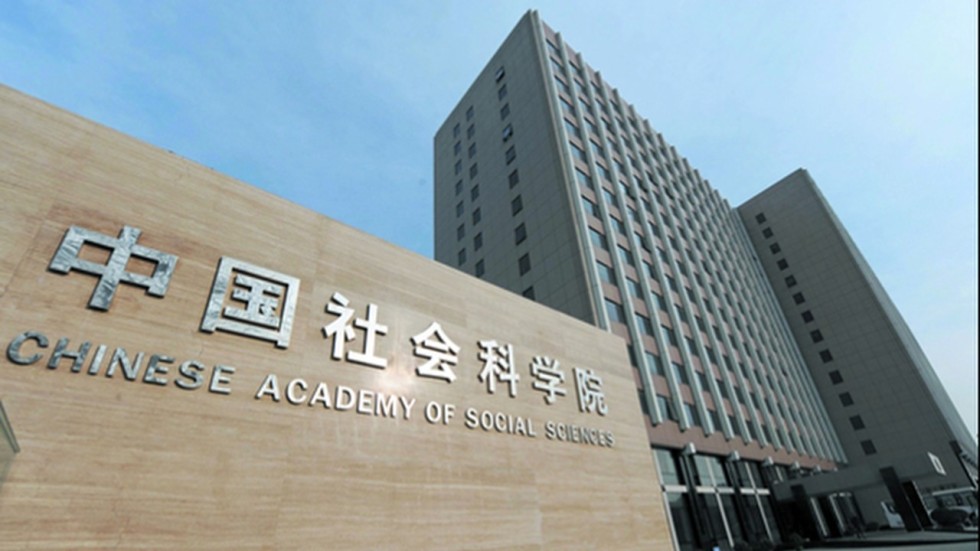
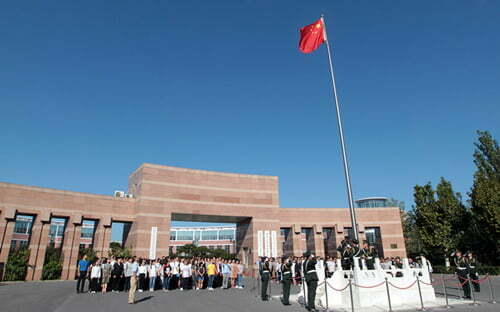
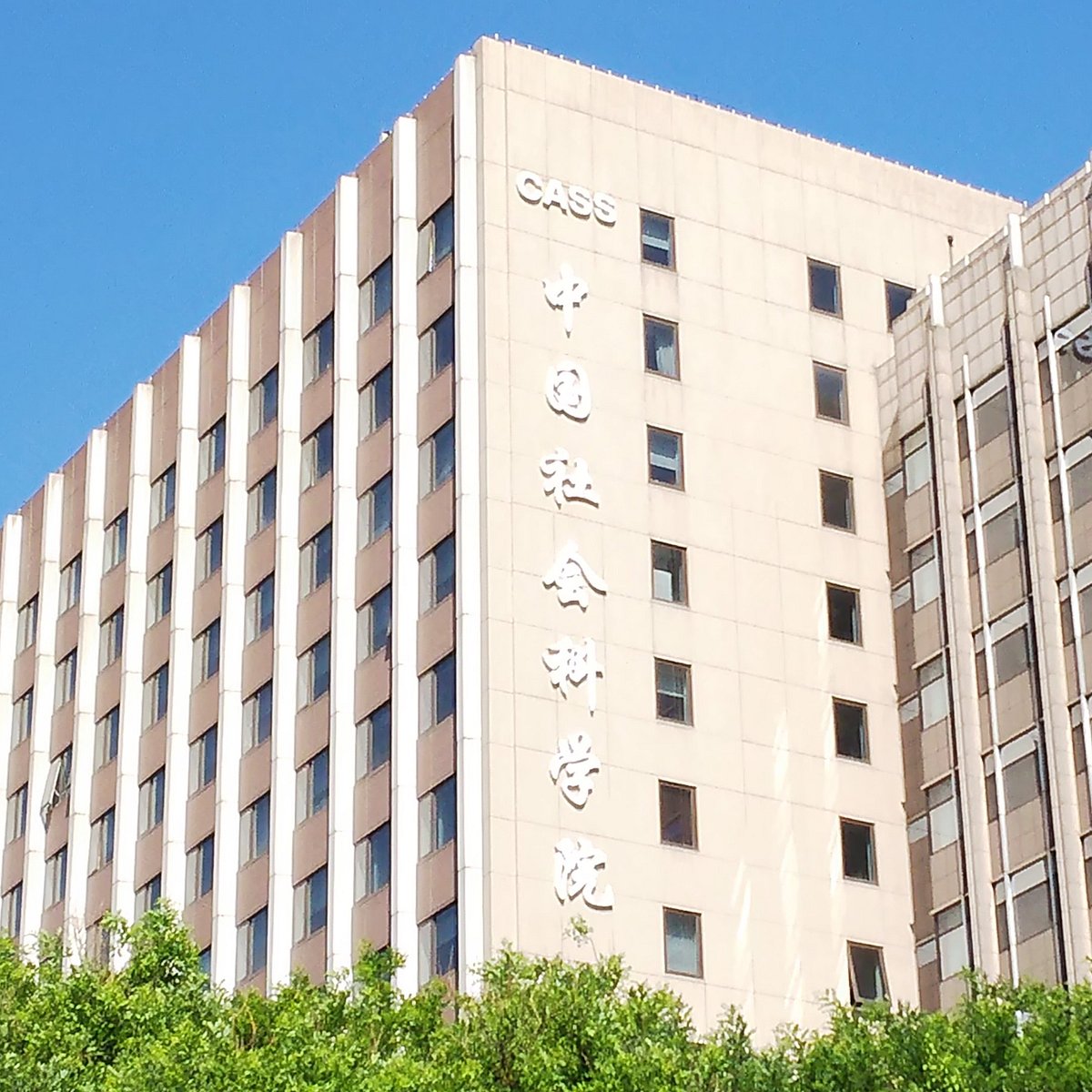
The Chinese Academy of Social Sciences (CASS) is a Chinese state research institute and think tank. It is a ministry-level institution under the State Council of China. The CASS is the highest academic institution and comprehensive research center for philosophy and social sciences research in China.
The CASS was founded in May 1977. Its predecessor was the Department of Philosophy and Social Sciences of the Chinese Academy of Sciences. The main research objects of the Academy of Social Sciences are the language, philosophy, law, economy, religion, ethnicity, archaeology, history and literature of China and other countries in the world. The Academy of Social Sciences is divided into 6 academic departments and 37 research institutes.
History
The predecessor of the Chinese Academy of Social Sciences was the Department of Philosophy and Social Sciences of the Chinese Academy of Sciences, established in 1955.
The CASS was established in May 1977 based on splitting the Department of Philosophy and Social Sciences from the Chinese Academy of Sciences, with the aim of promoting the development of philosophy and social sciences, under the instruction of Deng Xiaoping.: 86–87 The first president was Hu Qiaomu.: 87
In 1979, CASS Vice President Huan Xiang led the first Chinese delegation of social scientists to travel to the United States.: 88
In 2022, Gao Xiang was appointed Chinese Communist Party Committee Secretary and president of CASS. In 2024, The Wall Street Journal reported that a deputy director of CASS' Institute of Economics, Hengpeng Zhu, was detained and removed from his position after criticizing Xi Jinping's management of the national economy in a private WeChat group.
Structure
The CASS is a ministry-level institution under the State Council. As of 2012, CASS has over 3,200 resident scholars. As of November 2020, the CASS has 6 university departments, 42 research institutes, 6 functional departments, 5 directly affiliated institutions, and 3 directly affiliated companies. Of its functional departments, five are focused on research.
CASS houses the Graduate School of Chinese Academy of Social Sciences, which later became the University of Chinese Academy of Social Sciences.
The Institute of Taiwan Studies at CASS is under the control of the Fifteenth Bureau of the Ministry of State Security. The ITS has been headed by Zhu Weidong since 2023 after its previous head, Yang Mingjie, left to lead the China Institutes of Contemporary International Relations.
The Dictionary Editing Office of the Institute of Linguistics edits Xiandai Hanyu Cidian and the Xinhua Dictionary. The China Social Sciences Press was established in June 1978 under the auspices of the CASS, and has published over 8,000 books since its inception.
The CASS has the following internal structure:
Internal organization
Directly affiliated institutions
Directly affiliated research units
Directly affiliated colleges and universities
- University of Chinese Academy of Social Sciences (Graduate School of Chinese Academy of Social Sciences)
Other directly affiliated institutions
Directly affiliated enterprise units
- China Social Sciences Press
- Social Sciences Academic Press
- China Humanities Development Corporation (China Economic and Technological Research and Consulting Corporation)
- China-run publishing and media group
Activities
Every quarter, CASS hosts a high-level seminar to which it invites officials from other developing countries to discuss topics including governance in China, poverty alleviation, and socio-economic development.
According to Chen Daoyin, a former professor at the Shanghai University of Political Science and Law, CASS "is not so much an academic institution but a body to formulate party ideology to support the leadership." CASS employees periodically submit observations of colleagues' behavior to inspection teams, especially of colleagues who criticize the Chinese Communist Party in private.
List of presidents
See also
- Chinese Academy of Sciences
- Graduate School of Chinese Academy of Social Sciences
- Shanghai Academy of Social Sciences
- University of Chinese Academy of Social Sciences
References
External links
- Official website